
Norfolk County is launching a County-wide organics program for weekly organic waste collection to divert this material from landfills.
Green Cart Organic Waste Collection
Frequently asked questions
How much of Norfolk’s waste currently includes organic material?
A recent waste audit found that over 40% of residential garbage in Norfolk is organic material that could be composted. This includes food scraps, tissues, and other biodegradable items.
- In urban areas, 44.97% of waste was compostable
- In rural areas, 42.84% of waste was compostable
By using the new green bin program, residents can help divert this material from landfills, reduce environmental impact, and support a more sustainable waste system.
Review the 2024 Norfolk County Urban and Rural Waste Composition Audit (PDF).
Will I receive an organics cart?
Yes. Each household will receive an organics cart and a small kitchen bin.
Do I have to receive a green (organics) cart?
Yes. Delivery of the green cart is mandatory for any property receiving Norfolk County waste collection services. The garbage and organics carts are owned by Norfolk County and assigned to your property.
Curbside audits show 40-45 percent of Norfolk County's curbside garbage is organic waste that could be diverted from our landfill. The new green cart will help get food and organic waste out of the garbage.
No, because when food waste goes to a landfill, it is buried without oxygen under more garbage. In these conditions, it breaks down very slowly and actually produces methane, a powerful greenhouse gas that contributes to climate change. Due to a lack of oxygen, food and other materials can remain mostly intact for years, rather than fully decomposing.
Composting food waste is different. Food waste breaks down naturally with oxygen and can be turned back into healthy soil to help grow new food, creating a more sustainable, circular system instead of just adding more waste to the landfill.
I already use a backyard composter. Why do I need to use the green organics cart?
While home composting is a great way to reduce waste and lower your household’s carbon footprint, municipal composting programs offer the ability to compost items not suitable for home composters, such as meat, bones, dairy, and food-soiled paper. These programs also offer industrial-scale processes that can produce large amounts of consistently high-quality compost in less time.
By incorporating the organics cart program into your household’s already environmentally friendly waste management practices, you can further increase the amount of organic waste your household diverts from landfills.
What can go in the organics cart?
What to put in the organics cart:
Food waste:
- Fruits and vegetables
- Bread, pasta, rice
- Meat, bones, fish
- Dairy, eggshells
- Coffee grounds, tea bags
- Sauces, oils (small amounts)
Paper and other:
- Napkins, paper towels
- Muffin liners, paper plates
- Popcorn bags, parchment paper
- Cut flowers (no soil)
Liners you can use:
- Certified compostable bags
- Newspaper
What NOT to put in the organics cart:
- Diapers
- Pet waste
- Plastic bags
- Yard waste
- Hygiene products
Can I use compostable bags in the organics carts?
Yes. Certified compostable bags are accepted inside the organics cart.
It is recommended to line your kitchen container (which comes with your organics cart) with either certified compostable bags/liners or with newspaper. Those bags/liners can then be placed inside your green cart.
You can buy kitchen bags and liners at:
- Canadian Tire
- Walmart
- Amazon
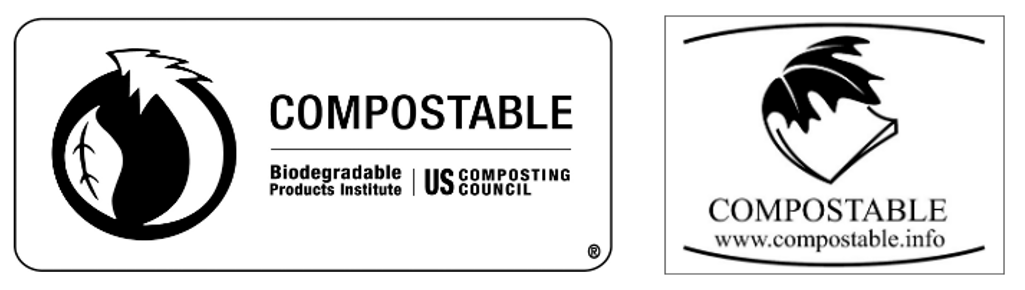
Certified bags/liners must display either the BPI or BNQ logo to be accepted in Norfolk County's green cart. Look for these symbols to make sure the bags are compostable:
Are the stickers placed on fruits and vegetables at the grocery store compostable?
No, these stickers are not compostable as they are typically made from plastic and glue that will not break down. Stickers should be removed before placing fruits and vegetables in the organics cart or, better yet, look for and purchase fruits and vegetables without these stickers to avoid the problem altogether.
Does the organics cart have a lock to prevent animals from getting in?
Yes. The organics cart is designed to be secure and will have a gravity lock to keep the bin secure from animals.
Does the organics cart come with a smaller container for under the sink?
Yes. A kitchen container will be provided with the organics cart. Residents are encouraged to use the small kitchen bin to collect scraps and transfer the scraps to their organics cart.
What are the dimensions of the organics kitchen bin?
The small organics kitchen bin measures approximately 9" L x 12" W x 9" H. It holds approximately 7 litres of kitchen scraps.
Can I put my kitchen container at the curb for collection?
No. Kitchen containers are for indoor use only and will not be collected. Empty the contents into your green cart and place only the green cart at the curb for collection. Norfolk County's automated collection trucks are designed to collect green carts only.
Every week, you can place organic waste, such as food scraps and food-soiled paper, in your green cart instead of the garbage.
Using the green cart helps divert waste from the landfill and can significantly reduce the amount of garbage your household produces. Norfolk County's waste audits found that approximately 43 to 45 percent of household waste could be composted through the organics program.
What does NOT go in the green cart?
Do not place:
Diapers
Pet waste
Plastic bags
Yard waste
Hygiene products
These items should be managed through other waste streams.
Using your kitchen container
Your kitchen container makes it easy to collect food scraps where they are created.
Keep the container in a convenient location, such as under the sink.
Collect food scraps while cooking and cleaning up meals.
Empty the contents into your green cart regularly.
Liners and compostable bags
You may line your kitchen container with:
✅ Newspaper
✅ Certified compostable bags displaying a recognized certification logo, such as the BPI compostable symbol.
Using approved liners can help reduce odours and keep material from sticking to the container.
Tips for keeping your green cart clean
Reduce odours
Line your kitchen container with newspaper or certified compostable bags.
Empty your kitchen container regularly.
Set your green cart out for collection every week, even if it is not full.
Keep pests away
Green carts are equipped with a gravity lock designed to help prevent access by animals when used properly. Keep the lid fully closed between collections.
Cleaning your cart
Consider adding some practical guidance that likely isn't in the FAQ but is helpful for residents:
Rinse your cart periodically with water.
Sprinkle baking soda in the bottom of the cart to help control odours.
Store your cart in a shaded location when possible.
Freeze meat scraps until collection day during hot weather.
(Note: these are best-practice tips and not content sourced from County materials.)
Collection schedule
Green cart collection occurs weekly.
Garbage collection occurs every other week.
Recycling collection continues weekly.
Be sure to place carts at the curb before 7 a.m. on collection day.
What goes in the green cart
Food waste
- Fruits and vegetables
- Bread, pasta and rice
- Meat and bones
- Fish and seafood
- Dairy products
- Eggshells
- Coffee grounds and filters
- Tea bags
- Plate scrapings
- Leftovers
- Spoiled food
- Small amounts of sauces and cooking oils
Food-soiled paper
- Napkins
- Paper towels
- Paper muffin liners
- Paper plates
- Popcorn bags

What goes in the green cart
Food waste
- Fruits and vegetables
- Bread, pasta and rice
- Meat and bones
- Fish and seafood
- Dairy products
- Eggshells
- Coffee grounds and filters
- Tea bags
- Plate scrapings
- Leftovers
- Spoiled food
- Small amounts of sauces and cooking oils
Food-soiled paper
- Napkins
- Paper towels
- Paper muffin liners
- Paper plates
- Popcorn bags
What does NOT go in your green cart
- Diapers
- Pet waste
- Kitty litter
- Plastic bags
- Yard waste
- Hygiene products (e.g., medical products, tampons, etc.)
These items should be managed through other waste streams.


